Creating a Memorial for Your Pet: Simple Rituals That Help
Ritual is one of the oldest tools humans have for processing grief. When a pet dies, creating a meaningful memorial, however small, can be a powerful part of moving through the loss.
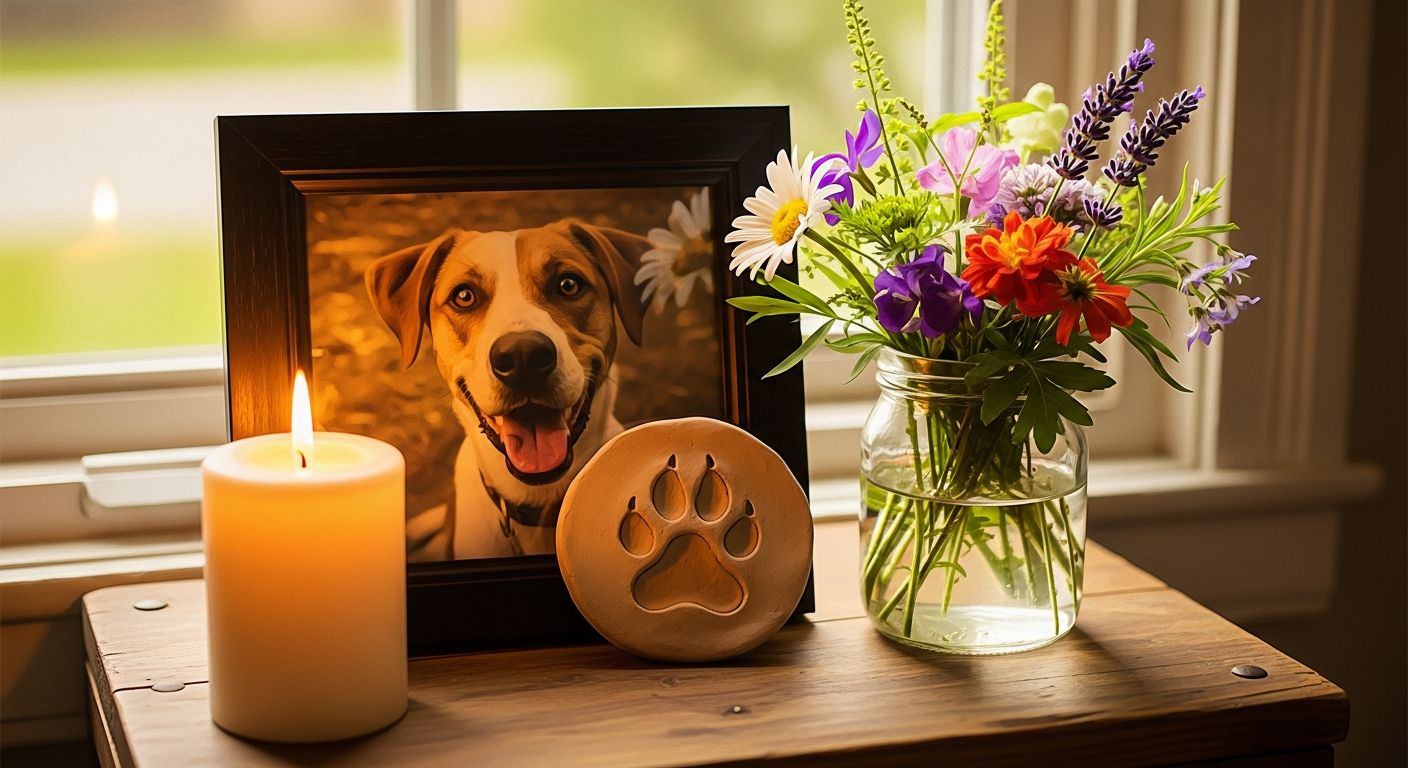
Human cultures across history have marked death with ritual: gathering, storytelling, fire, objects, words. These practices are not just tradition. They serve a grief function. They give the formless feeling of loss a shape, a container, a moment in time that says: this mattered.
When a pet dies, we often do not have established rituals to fall back on. There is no standard funeral, no community gathering, no shared liturgy. You may find yourself holding a grief that has no form, and that formlessness can make it harder to process.
Creating your own memorial, however small or simple, can help.
The purpose of ritual in grief
Ritual does a few things that ordinary life does not. It slows you down. It asks you to be present. It gives the grief a place to land instead of staying diffuse and everywhere.
It also communicates — to yourself and sometimes to others — that what happened mattered. That the life you are marking was real and worth marking.
You do not have to be religious for ritual to work. Ritual is not about belief. It is about intention and attention.
Simple memorial ideas
These are not prescriptions. Take what resonates and leave the rest.
A gathering, small or large. You do not need many people — even one other person who knew your animal can make the ritual feel shared. Light a candle, share a memory or two, say their name aloud.
A letter. Write to your pet. Tell them what they gave you, what you will miss, what you wish you had said. You do not need to share it with anyone. The writing itself is the ritual.
A memory box. Gather objects that held meaning: a favourite toy, a collar, a photograph, a tuft of fur. Place them together somewhere intentional. This physical gathering of objects can be a way of gathering the grief too.
Planting something. Many people find meaning in planting a tree, a flowering shrub, or a window box in their pet's name. The ongoing living thing becomes a place to return to.
A regular small practice. Some people light a candle at the same time each evening for a period of weeks, or visit a particular place they walked with their dog. Repetition gives grief structure over time.
Scattering ashes. If you have your pet's ashes, choosing a meaningful place and time for their return to the earth can be a powerful final ritual.
There is no right way
The most important quality of a memorial ritual is that it feels true to your animal and to you. It does not need to be elaborate. It does not need to look like anything anyone else has done.
If you are struggling to create something that feels right, this is something I support clients through — helping you find the shape of a ritual that honours your specific animal and your specific relationship with them.
You don't have to carry this alone.
A free 15-minute call with Dawn. A 1-to-1 space to bring whatever you are actually carrying, without having to explain yourself first.
Book a Free Grief Support CallNot ready to call? See all support options
More gentle readings
What Not to Say to Someone Grieving a Pet (And What to Say Instead)
Most people say the wrong thing after a pet dies — not from cruelty, but from not knowing what helps. Here is a plain-language guide to what to avoid, and what actually lands.
When Pet Grief Does Not Lift: Understanding Prolonged Grief
For a significant number of people, grief after a pet's death persists well beyond what the people around them expect. Here is what prolonged grief disorder actually is and what helps.