Anticipatory Grief and Pets: Grieving Before the Loss
Grief that begins before a pet has died is real, valid, and often the most underacknowledged part of loving an animal who is declining. Here is what it looks like and how to move through it.
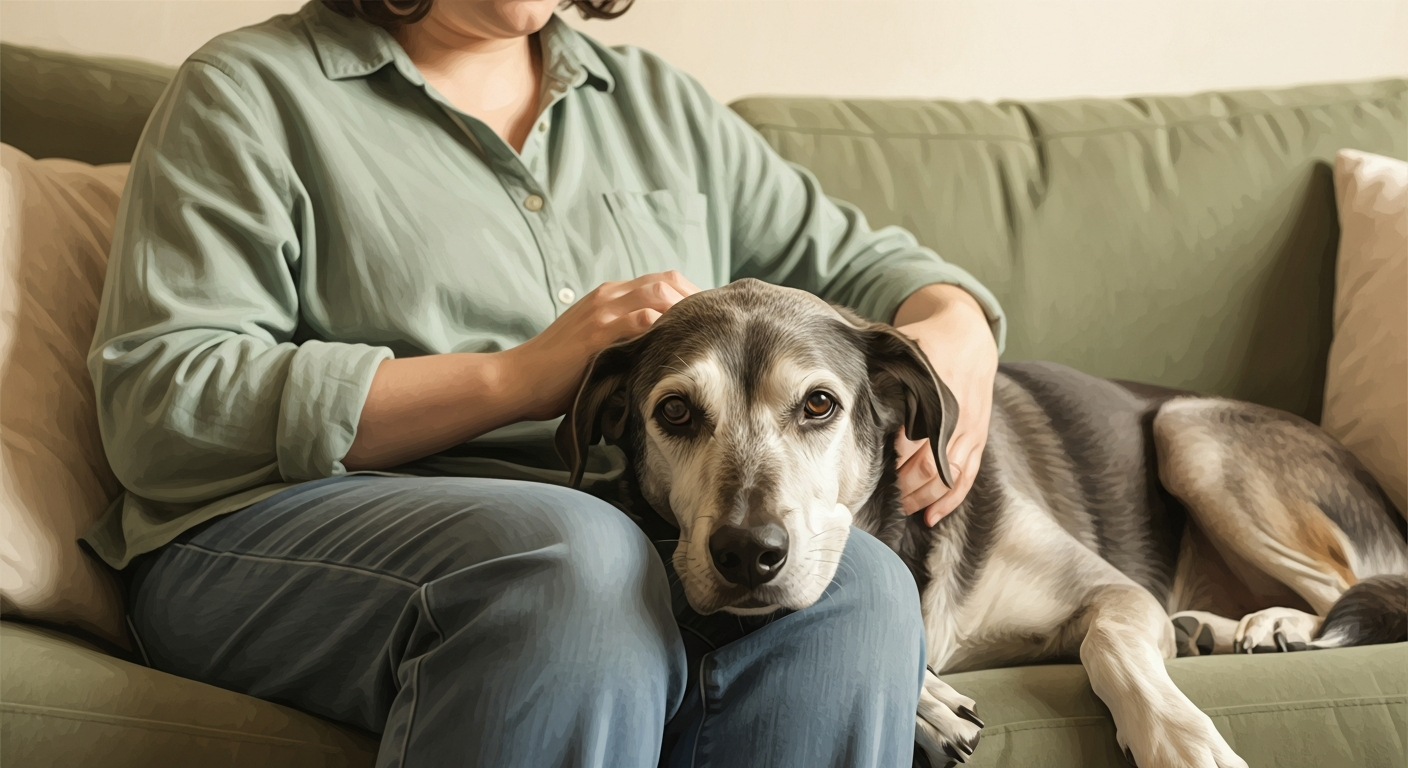
Grief That Starts Before the Death
Most people understand grief as something that begins after a loss. But if you have a pet with a terminal diagnosis, or a pet who is aging and visibly declining, you may already be grieving — even while your animal is still alive.
This is called anticipatory grief, and it is one of the most underacknowledged parts of loving a pet.
What Anticipatory Grief Feels Like
It can feel like mourning a version of your pet that no longer exists — the dog who used to run to the door, the cat who used to sleep on your chest. Even though they are still here, something has already been lost.
It can feel like dread. A low, persistent weight that arrives when you look at them, or when you think about the morning routine you will one longer have.
It can feel like guilt about the grief itself — as if feeling sad before they have died somehow means you have already given up on them.
None of these feelings mean you have given up. They mean you love your animal and you know, in some part of yourself, that you are moving toward a loss.
What Anticipatory Grief Is Not
Grieving in advance does not reduce the grief that comes after the death. Many people assume that because they started grieving early, the loss itself will be less devastating. For most people, that is not what happens. The anticipatory grief and the grief after the death are separate experiences. You are not spending down a budget.
It also does not mean you have emotionally abandoned your pet while they are still alive. Being sad does not prevent you from being present. Both can coexist.
What Tends to Help
Presence over preparation. The anticipatory period is not primarily a time for logistics — it is a time to be with your animal in whatever way still brings them comfort. The practical tasks matter, but they should not crowd out the time you have left together.
Naming what you are losing. Grief is more bearable when it is specific. You are not just losing "your pet." You are losing the specific weight of them on your lap, the sound of their nails on the floor, the morning routine you have had for twelve years. Naming those specific things, whether in a journal or in conversation with someone, helps the grief find shape.
Not doing it alone. The anticipatory period is often when people most benefit from talking to someone who understands — a trusted friend, a grief group, or a pet death doula. You do not have to wait until after.
Being gentle with yourself. There will be days when the anticipatory grief makes ordinary tasks feel impossible. That is not weakness. That is love responding to the knowledge of an impending loss.
Starting Support Before the Death
Many people find that beginning work with a grief specialist during the anticipatory phase is the most valuable time to do it. Not because the grief after the death will be less — it will still come — but because you have more space to prepare emotionally, ask questions, and put rituals in place before the acute loss arrives.
If your pet has received a serious diagnosis or you can see the decline clearly, the free "When Is It Time?" framework was written for exactly this moment. It is a practical guide to the questions most people are holding during this period.
These frameworks are a starting point, not a substitute for real support. If the grief is sitting heavily — affecting your sleep, your work, your sense of yourself — reading about it only goes so far.
Book a grief support session with Dawn — a one-on-one space to bring whatever you are actually carrying, without having to explain yourself first.
You don't have to carry this alone.
A free 15-minute call with Dawn. A 1-to-1 space to bring whatever you are actually carrying, without having to explain yourself first.
Book a Free Grief Support CallNot ready to call? See all support options
More gentle readings
What Not to Say to Someone Grieving a Pet (And What to Say Instead)
Most people say the wrong thing after a pet dies — not from cruelty, but from not knowing what helps. Here is a plain-language guide to what to avoid, and what actually lands.
When Pet Grief Does Not Lift: Understanding Prolonged Grief
For a significant number of people, grief after a pet's death persists well beyond what the people around them expect. Here is what prolonged grief disorder actually is and what helps.